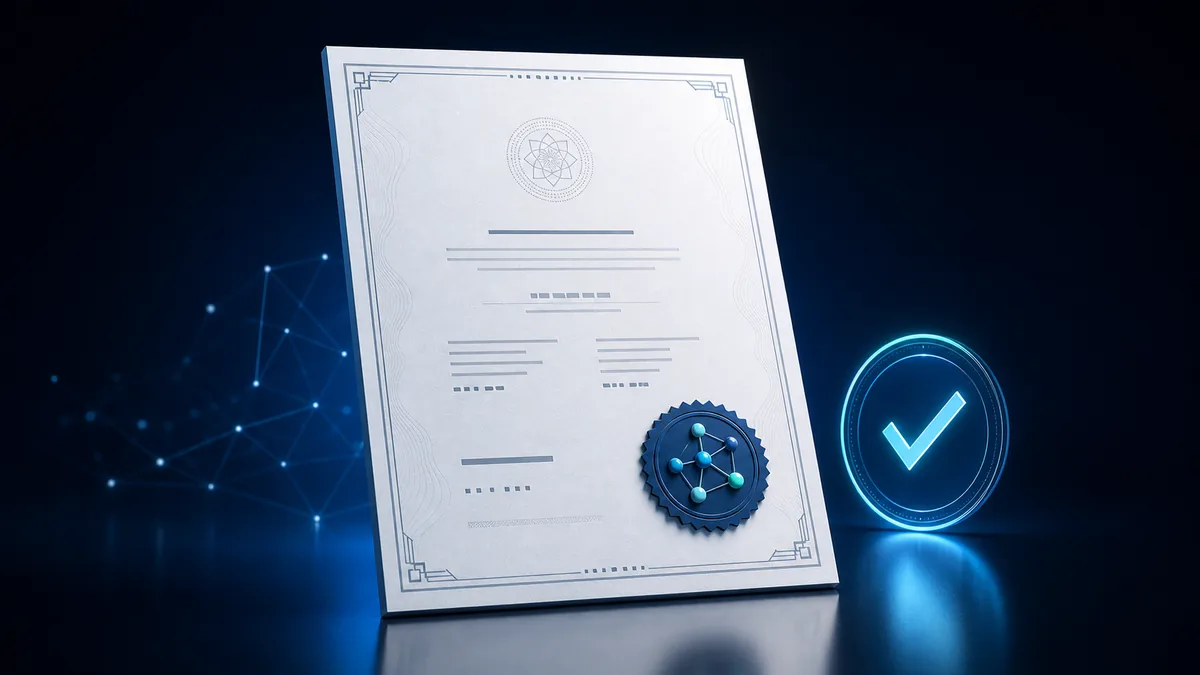
A common worry before buying academic-rate access: will the certificate look different? Will an employer be able to tell how the access was paid for?
No. And it is worth understanding exactly why, because the reason is structural rather than a reassurance.
What is on the certificate
A Coursera course certificate carries the course name, the offering institution, the learner’s name, the completion date, and a verification URL unique to that certificate.
It does not carry billing information, subscription type, or how the seat was licensed. Coursera has no reason to print that, and does not.
How verification works
The verification URL resolves to a page on Coursera’s own domain showing the same details. That is what an employer checks: Coursera confirming that this person completed this course.
The check is against Coursera’s records of your account and your completion. The licensing route sits in a completely different part of Coursera’s systems from the credential record.
Why the name matters more than anything else
The one thing that genuinely affects the certificate is the name on your Coursera account, because that is what gets printed.
Get it wrong and the certificate says the wrong thing, which is a real problem if you are attaching it to a job application or a CV. Getting it corrected afterwards means going through Coursera’s own support.
This is why the name is asked for up front rather than assumed from an email address. Spell it the way you want it printed.
What a certificate does not prove
Worth being clear-eyed about, since this cuts against the sales pitch: a course certificate proves you completed a course. It is not a degree, it is not accredited in the sense a university qualification is, and no employer treats it as one.
What it does well is evidence a specific skill, from a named institution, on a verifiable record. That is genuinely useful. It is just a different thing from a qualification, and anyone telling you otherwise is selling something.